There’s a point in every long travel day—train seats molded to other people’s stories, airport lounges buzzing under artificial light—where I realize how much of modern life funnels us into chairs. We sit to work, commute, watch, rest. Minutes become hours, and the body folds inward without even asking for permission.
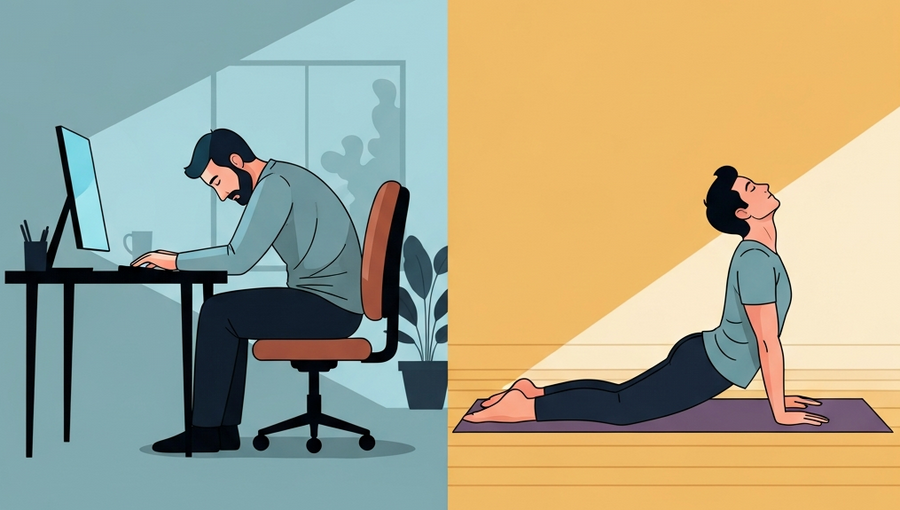
Sitting has been called “the new smoking” not because it’s equally harmful, but because it’s quietly habitual. A lifestyle pattern that slowly reshapes the body, affects posture, energy, and even long-term health. And most of us don’t notice the tension until something finally speaks up: tight hips, a stiff back, tired eyes, shallow breath.
But there’s an antidote that doesn’t require complicated equipment or a gym membership. Yoga has this unique way of unwinding what sitting compresses. It reopens the body, strengthens what gets weak, and reconnects us to breath—our most natural grounding rhythm.
This post is for digital nomads, remote workers, travelers, creatives—anyone living a life where sitting sneaks in more than it should. Let’s explore why stillness matters, how yoga resets the body, and how a few simple asanas can transform your day.
Why Sitting Is Called “the New Smoking”
It’s not the act of sitting itself—it’s the lack of movement. When we sit for long periods, muscles shorten, circulation slows, and posture shifts into a shape our anatomy was never meant to hold.
Here’s what happens:
• Hip flexors shorten, tilting the pelvis forward and creating lower-back tension.
• The spine compresses, especially in the lumbar region.
• Shoulders round and the neck leans forward, straining upper-back muscles.
• Circulation slows, making the body feel heavy and lethargic.
• Glutes “switch off,” leading to instability and decreased mobility over time.
Human bodies are designed for movement—small shifts, subtle engagement, constant micro-adjustments. Sitting removes those signals. But the answer isn’t perfection; it’s awareness and tiny, consistent shifts back to alignment.
How Yoga Helps Reverse the Effects of Prolonged Sitting
Yoga is a reset. It stretches what tightens, strengthens what weakens, and reawakens breath—your built-in posture guide. Below are simple, effective poses with easy cues you can follow even if you’re new to yoga.
Low Lunge (Anjaneyasana)
Counters tight hip flexors and lower-back compression.
Cues: Step one foot forward, drop the opposite knee. Sink the hips gently forward. Lift the chest without arching the back. Keep breath slow and steady.
Camel Pose (Ustrasana)
Opens the chest and shoulders after long hours of rounding forward.
Cues: Kneel with hips over knees. Place hands on the lower back. Lift the chest up before leaning back. Keep the neck long and core slightly engaged.
Bridge Pose (Setu Bandha Sarvangasana)
Strengthens glutes and opens the front body.
Cues: Lie on your back, feet hip-width. Press into your heels as you lift your hips. Draw the shoulder blades together gently beneath you.
Locust Pose (Salabhasana)
Strengthens the back body weakened by sitting.
Cues: Lie on your belly. Lift chest, arms, and legs slightly off the ground. Keep gaze down and neck relaxed. Breathe into the ribs.
Chair Pose (Utkatasana)
Builds support through core, legs, and glutes.
Cues: Feet together or hip-width. Sit back as if into a chair. Lift arms. Keep weight in heels and chest open.
Reverse Tabletop
Opens chest and strengthens glutes.
Cues: Sit with hands behind you, fingers pointing to feet. Plant feet on the ground and lift hips high. Press shoulder blades back.
Seated Spinal Twist
Restores spinal mobility and improves posture.
Cues: Sit tall. Twist gently toward one knee. Keep both sit bones grounded. Lengthen the spine with each inhale, rotate softly with each exhale.
Cat-Cow (Marjaryasana-Bitilasana)
Rehydrates the spine and releases tension.
Cues: On hands and knees, alternate rounding and arching the spine. Let breath guide the movement.
Sphinx Pose
Counteracts slouching and supports lumbar health.
Cues: Lie on your belly and rise onto forearms. Lift the chest gently. Keep shoulders relaxed away from ears.
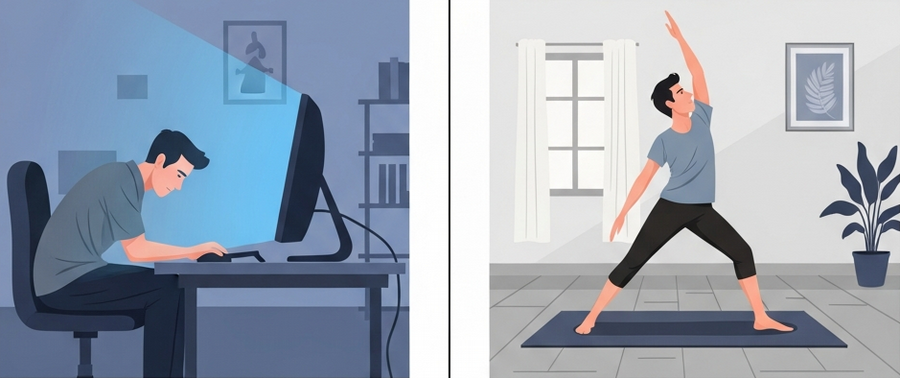
Small Habits to Balance a Sitting-Heavy Life
Movement doesn’t need to be intense—it just needs to be intentional. Try these daily practices:
• Stand up every 30–45 minutes.
• Sit on the floor occasionally to encourage natural posture.
• Walk during voice calls.
• Use yoga stretches as “micro-breaks.”
• Choose stairs more often.
• Close out the day with a 5–10 minute unwind flow.
These tiny shifts accumulate into profound benefits for posture, mood, and energy.
The Bigger Picture: Reclaiming Presence Through Movement
What I love most about yoga is that it asks us to feel—slowly, honestly. It brings awareness back into the body after hours of drifting somewhere outside ourselves. It encourages presence in a life that’s always pulling us towards the next notification, the next project, the next seat.
Sitting may be the new smoking, but mindful movement is one of the simplest ways to reclaim our vitality. Yoga reminds us that we’re not made to fold inward—we’re meant to expand, explore, breathe deeply, and stay connected to the inner landscape that travels with us wherever we go.
Wherever your journey is taking you next, give your body the kindness of movement. Your future self will thank you.

Leave a comment